
Additional Profiles
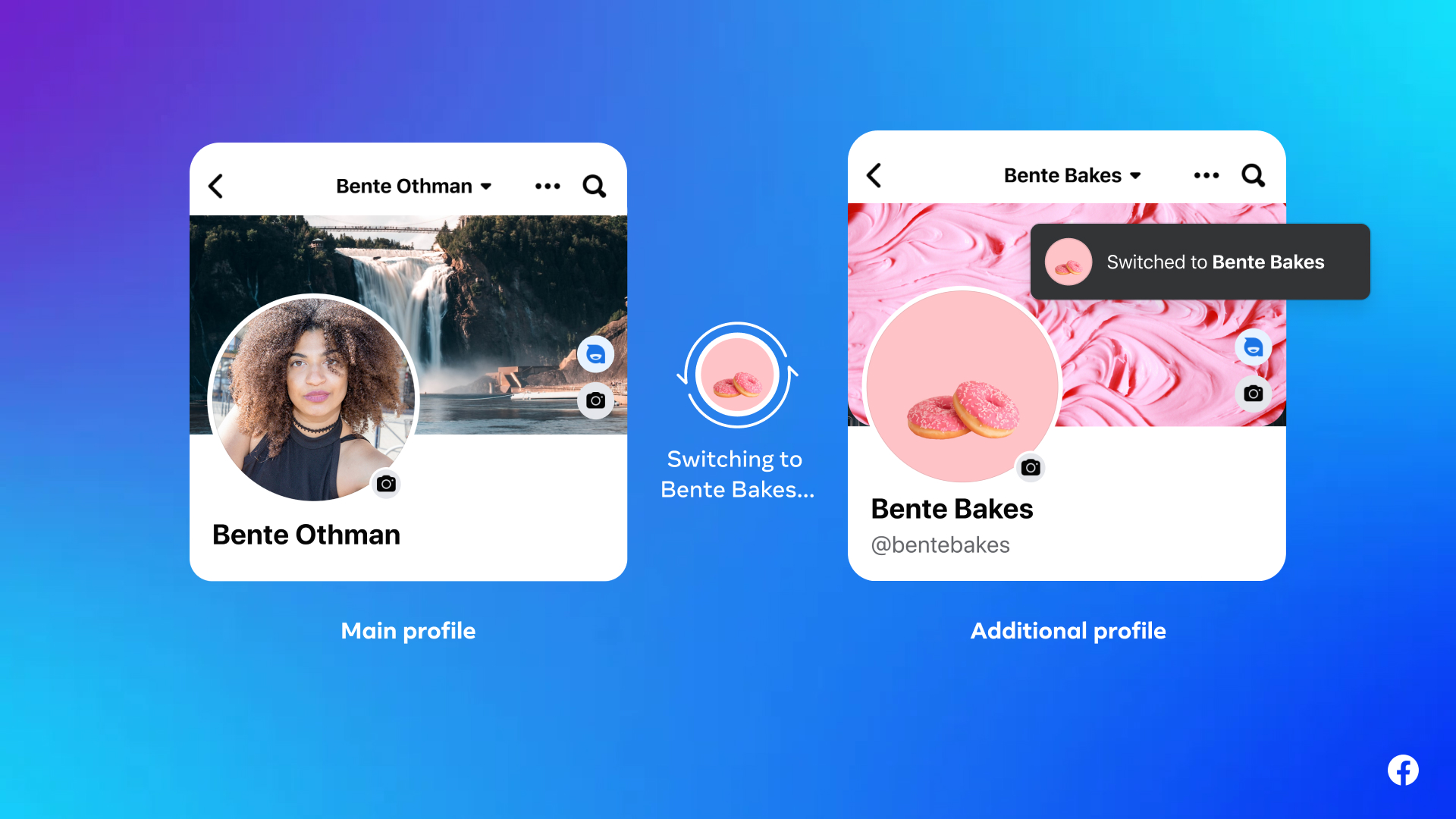
Onboarding, creation, and switching experience for additional Facebook profiles. Helping people create separate identity spaces for different communities and interests.
Context
Facebook was built on a "one person, one profile" paradigm, but users' lives are more layered than that. Research showed users were creating unauthorized duplicate accounts, disengaging from participation, and avoiding authentic expression out of fear of judgment across mixed audiences.
How might we give users control over how they show up in different contexts, without undermining the trust and integrity of the Facebook ecosystem?
The problem
Users wanted different identity spaces for communities, interests, and audiences, but Facebook was built around one primary profile. Without a clear sanctioned model, users had to improvise with separate accounts, inconsistent privacy expectations, or unclear audience boundaries.
{{ item.title }}
{{ item.desc }}
The solution
Additional Profiles let users create up to four profiles alongside their main Facebook account, each with its own name, social graph, and feed, while keeping everything tied to one account for safety.
My role
- Led design from discovery through scaled launch, partnering with PM, engineering, privacy and integrity.
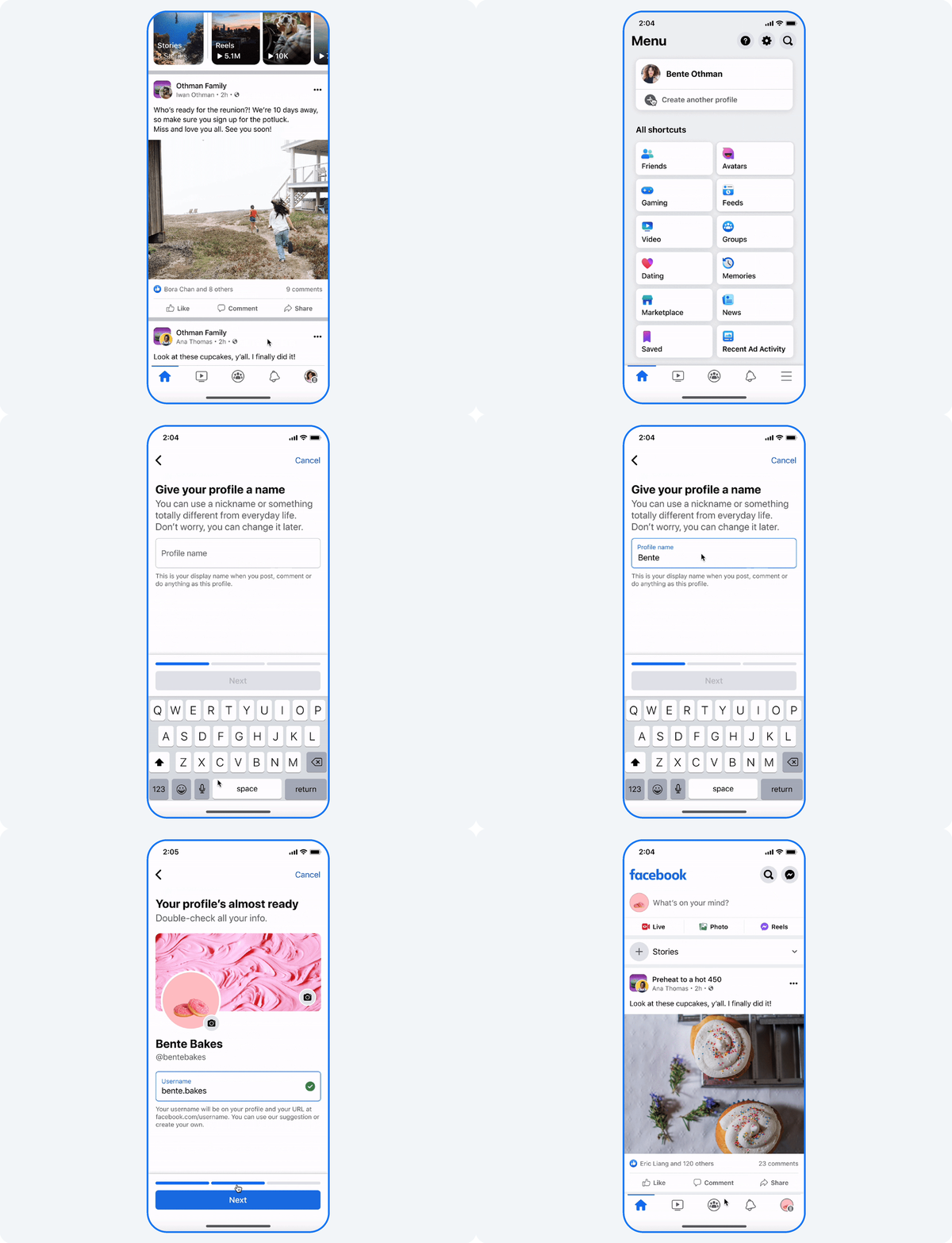
- Designed the end-to-end experience: creation, onboarding, profile switching, and user education. Facilitated alignment on privacy boundaries and multi-profile mental models across stakeholders.
- As the product scaled, stayed close to engineering through phased rollout, refined the experience at launch, and helped extend our design patterns into other parts of the product.
What I designed
{{ d.title }}
{{ d.body }}
{{ d.extra }}
Impact
Additional Profiles shipped globally on September 7, 2023, becoming Facebook's path for identity separation. The product followed a phased, metrics-driven rollout over two years before reaching full global scale.
Personal takeaways
This was a multi-year, foundational shift for Facebook, requiring constant balance between user freedom and platform safety, simplicity and regulatory compliance, growth and ecosystem health.
A few things that stuck with me: the best problem framing came from deeply understanding identity expression barriers, not from the feature brief. When it came to retention, nothing moved the needle like helping users build a real social graph around their new identity. Trust was also earned through transparency. Being clear about what was and wasn't shared between profiles made users feel safe enough to actually use it.